Sahand Hagi

Cologne Geneva

A commercial operator who turns technology into results.

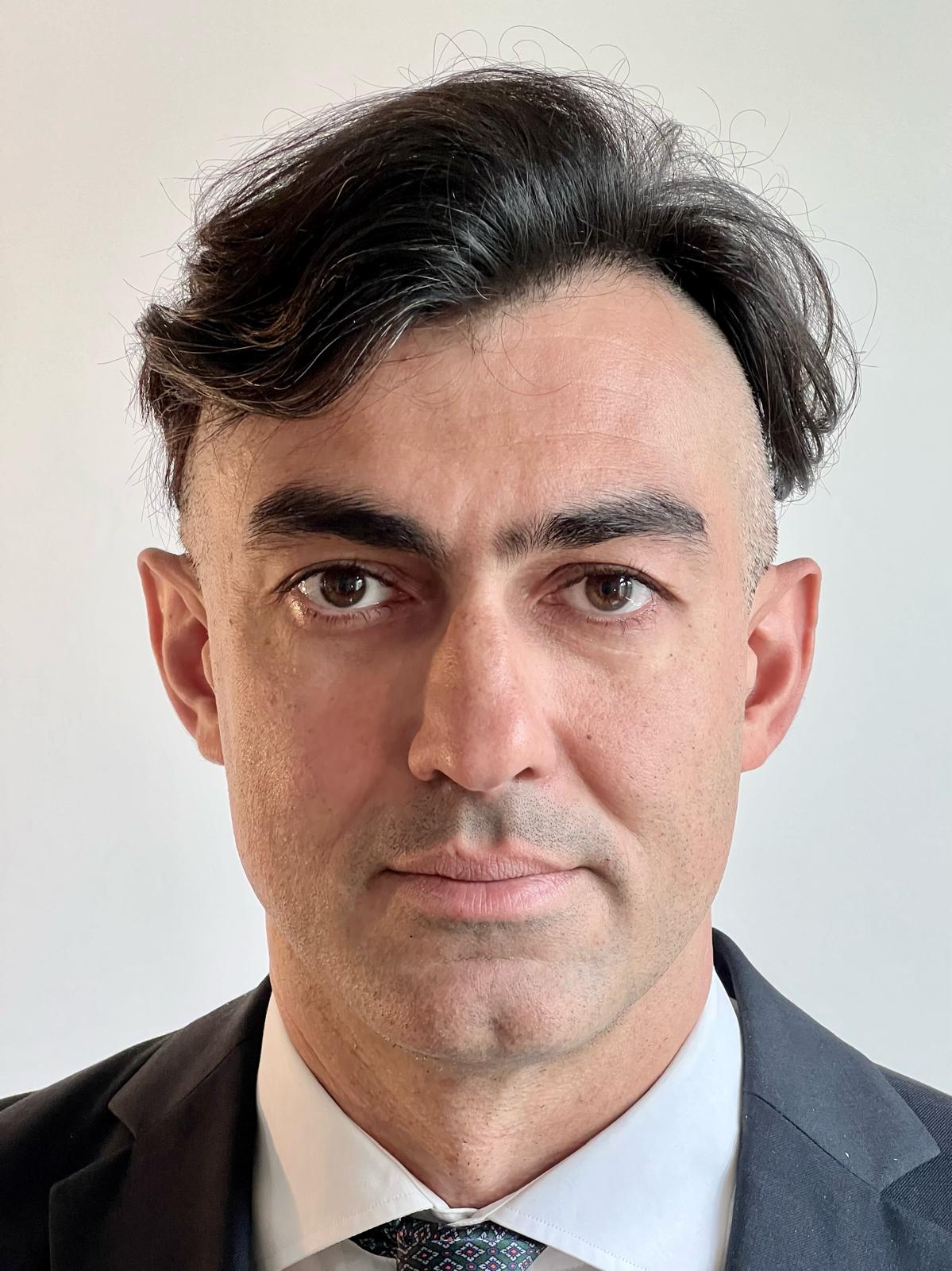
Portrait of Sahand Hagi

Sahand Hagi is a founding partner of Cedra Ventures, with nearly two decades turning complex situations into results, deepest in energy and now across technology. He originates and closes transactions, carries businesses through their hardest inflection points, and puts frontier AI into production across media, energy, law, and medicine.

TransactionsTurnaroundsFrontier AIEnergyGeopolitics
Founding Partner · Cedra Ventures
Founder · Vague Ventures
Energy · AI · Geopolitics
At the front line since 2008

01 / About

An operator who takes responsibility for results.

Sahand Hagi is a founding partner of Cedra Ventures, a Zurich-based principal-investment and operational syndicate of owner-operators. It acquires, runs, and advises businesses at their critical inflection points, growth acceleration, succession, and turnaround, committing its own capital and taking responsibility for results rather than only advising.

His own edge is the organisational one: building the capability a company needs to carry it through exactly those moments. It began in 2014, with his first investment and the full recovery of a 50-person company out of insolvency, and scaled from there, to commercial franchises built from a clean sheet and interim leadership of companies of up to 1,500 people.

Around that sit his core capabilities. He runs Vague Ventures, his own practice delivering high-stakes AI as a service and the products behind it. He co-founded MedAI, clinical AI for surgical teams. He runs frontier AI in production across media, energy, law, and medicine, using it to make exacting work faster and more reliable. And beneath all of it is nearly two decades, since 2008, at the commercial front line of energy, from building E.ON’s Caspian gas origination to a senior seat on the executive team of a multi-billion-dollar London portfolio.

His grounding is in the humanities and social sciences, not business, and it proved the more useful training. He studied philosophy, history, public law, and political science, majored in political science, and took the INSEAD Executive MBA years later. The focuses were deliberate: ethics and the philosophy of the state; post-war German and French history; theories of conflict and of the state, and post-war critical theory, the Frankfurt School and Adorno, and Foucault above all. Reading how power, institutions, and incentives actually operate beneath the surface is what lets him negotiate across the table from states and national oil companies, price political risk, and see the structure of a deal or a market that others miss. It also sets the method: a symptom is never the problem. Understanding the system that produces it, and changing that system rather than treating its surface, is what drives the practice.

That instinct is old. In his first high-stakes role, in his mid-twenties, he asked why the processes around him had grown so large. The answer was power: high stakes justify big organisations, and big organisations reward the managers who build them. He took the opposite path: work as lean as possible, not to fatten a margin, but because effort freed from bureaucracy always finds work worth doing. An overblown organisation is not just inefficient; it is destructive. And no task should depend on one person’s accumulated history: knowledge belongs in the system, reproducible, never locked in a head.

INSEAD Global Executive MBA. Guest lecturer in Energy Security, Geopolitics & Commodity Markets at King’s College London and the Universities of Cologne and Berlin. Native German and English; heritage Persian and Azerbaijani Turkish; French and Italian.
Conviction

The interesting problems sit where deep domain knowledge meets machine reasoning. The person who understands both should be the one to build.

02 / Career

Nearly two decades, from the trading desk to the build bench.

  • 2026 to present
    Co-Founder · MedAI & Science of Reading

    Clinical AI for surgical teams, and a literacy-support venture for people with reading and writing difficulties. Concept, prototypes, and commercial framework.

  • 2025 to present
    Founding Partner · Cedra Ventures, Zürich

    A Zurich principal-investment and operational syndicate of owner-operators, backing businesses at their growth-acceleration, succession, and turnaround points. Owns and operates World Radio Switzerland and ALVA Water.

  • 2022 to present
    Founder · Vague Ventures, Cologne

    Energy-tech, infrastructure, and industrial advisory, including interim managing director of a group of roughly 1,500 people, and now high-stakes, high-volume AI, run as a service and built into products. vagueventures.com ↗

  • 2020-2022
    Head of Energy DACH · Siemens, Cologne

    Built the energy-software commercial franchise from inception, a landing-team build that scaled the qualified enterprise pipeline from a near-standing start, and led a large manufacturing-execution-system programme for a chemical major.

  • 2018-2020
    Chief Asset Investments & Development Officer · Mercantile Maritime, London

    Three-person senior executive team with shared P&L for a multi-billion-dollar portfolio of pipelines, power plants, and LNG and oil positions. Closed joint ventures and acquisitions across the value chain, from origination to close.

  • 2014-2018
    Independent principal investor & operator

    First investment and the full recovery of a 50-person company out of insolvency, then commercial franchises built from a clean sheet. The operating track that Cedra Ventures later formalised.

  • 2008-2014
    Head of Caspian Region · E.ON, Düsseldorf

    Built E.ON’s Caspian gas-origination business from scratch, represented the group before EU institutions and regulators, and closed its largest long-term gas contract from a new source.

Method

Lean, not for the margin: effort freed from bureaucracy always finds work worth doing.

03 / Research · doctoral programme in progress

The material foundations of money and military power.

A single question runs under the work: what material base lets some nations run the world’s money, and others not? The programme treats energy, finance, and military power as one interacting system, three forms of complexity that hold each other up. Financial dominance and military reach are neither built nor held without a surplus of net energy; that surplus is in turn defended and priced by military and financial power. Energy is the leg existing theories keep leaving out, and the work puts it back.

Work in progress · Paper I

The material foundations of hegemonic financial order

Recasts money as a claim on past and future energy, and both financial order and military reach as structures only a high-surplus society can afford. Formalises a decline condition and derives testable propositions, drawing on energy-return-on-investment thresholds. The claim is specific enough to be proven wrong.

Work in progress · Paper II

Rise and fall across three hegemonic cycles

Traces the loop through the Dutch Republic (wind and peat to a commercial navy to the guilder), the British Empire (coal to a steam navy to sterling), and the United States (oil to a mechanised military to the dollar). Energy advantage arrives first, military reach follows, financial dominance last, and each erodes in turn.

Work in progress · Paper III

The transition paradox

Argues today’s energy transition is historically new, striking three supports of the current order at once: the civilian demand that subsidises military fuel, the petrodollar anchor, and net energy surplus itself. No earlier transition removed all three together.

Doctoral research in progress. Arguments above are the programme’s working theses, not settled findings.

04 / Writing & publications

Iran, the Middle East, energy, and who controls the machines.

One stance runs through the research and the writing: understand reality before trying to change it. The work does not exist to defend a position or serve an agenda. It asks what is actually true, and how a more just and sustainable world could be built on it. Where the evidence cuts against the hope, the evidence wins.

Power, Revolution, and Resistance: Iran’s Political System, Its Origins, and Its Challengers
Essay · work in progress · ≈54,000 words

Iran is neither the monolithic theocracy of hawkish imagination nor the maligned democracy of its apologists. Across twelve chapters, this work reads it as a durable hybrid, resilient by design and elite self-interest rather than mass belief, whose brittleness recent conflict exposed. It reframes sanctions, isolation, and strikes not as separate episodes but as installments in one story: the price of independence in an American-led order. A companion brief anatomises how the 1979 constitution keeps elected institutions subordinate to unelected clerical power.

The Burden of History: Germany, Israel, and the Question of Humanity
Essay · work in progress · ≈23,000 words

Beginning with a personal reckoning after October 7, 2023, this essay turns Germany’s memory-politics of “never again” back on itself, and examines the West’s responsibility for the conflict from the Balfour Declaration to Gaza. It asks what that responsibility, if accepted, would demand of German and Western policy.

Essay · CounterCritical · April 2026

Argues that AI-governance debates misframe the problem: the fight that matters is not over outputs, but over who controls the foundational infrastructure, and whether parts of that stack should be held in common. Read the essay ↗

Fluid-network digital twins for safe plant operations
Industry white paper · with Linde & Siemens

An advisory engagement on predicting hydrodynamic loading on chemical-plant piping, and cutting the heaviest simulation from about four days to about half a day. Read the case on Vague Ventures ↗

Essays on European energy security & commodity markets
20+ pieces · LinkedIn

A running body of commentary on energy security, geopolitics, and the political economy of the transition. Read the archive on LinkedIn ↗

Lecturing & teaching

Guest lecturer in Energy Security, Geopolitics & Commodity Markets, and teaches teams to use large language models across deterministic and probabilistic workflows.

King’s College LondonUniversity of CologneFreie Universität Berlin

Work with Vague Ventures

High-stakes, high-volume AI, as a service, and as products. Advisory across energy and industry.

Visit vagueventures.com →