01 / About
An operator who takes responsibility for results.
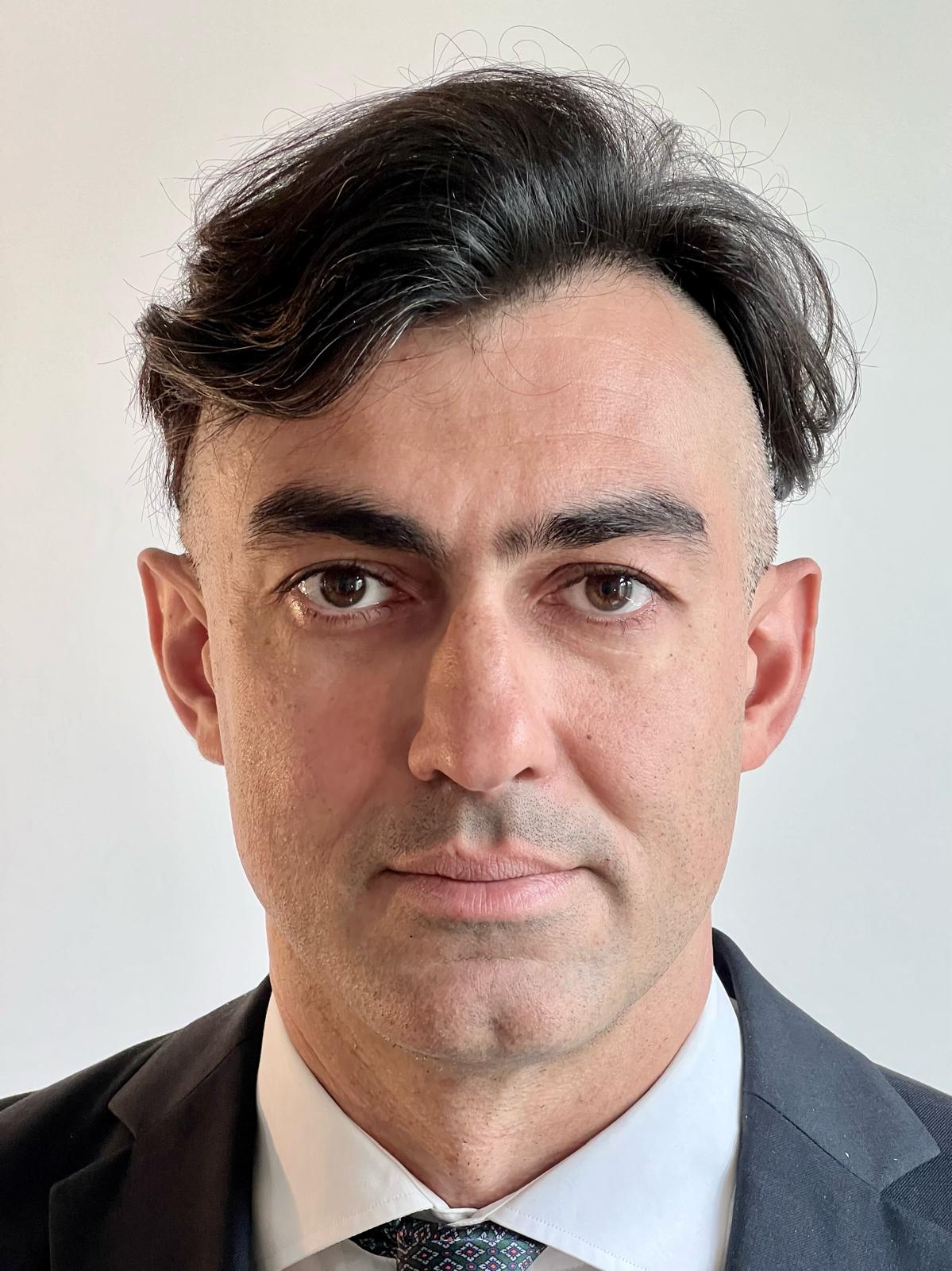
Sahand Hagi is a founding partner of Cedra Ventures, a Zurich-based principal-investment and operational syndicate of owner-operators. It acquires, runs, and advises businesses at their critical inflection points, growth acceleration, succession, and turnaround, committing its own capital and taking responsibility for results rather than only advising.
His own edge is the organisational one: building the capability a company needs to carry it through exactly those moments. It began in 2014, with his first investment and the full recovery of a 50-person company out of insolvency, and scaled from there, to commercial franchises built from a clean sheet and interim leadership of companies of up to 1,500 people.
Around that sit his core capabilities. He runs Vague Ventures, his own practice delivering high-stakes AI as a service and the products behind it. He co-founded MedAI, clinical AI for surgical teams. He runs frontier AI in production across media, energy, law, and medicine, using it to make exacting work faster and more reliable. And beneath all of it is nearly two decades, since 2008, at the commercial front line of energy, from building E.ON’s Caspian gas origination to a senior seat on the executive team of a multi-billion-dollar London portfolio.
His grounding is in the humanities and social sciences, not business, and it proved the more useful training. He studied philosophy, history, public law, and political science, majored in political science, and took the INSEAD Executive MBA years later. The focuses were deliberate: epistemology, the study of what makes a claim count as knowledge; ethics and the philosophy of the state; post-war German and French history; theories of conflict and of the state; and post-war critical theory, the Frankfurt School and Adorno, and Foucault above all.
Epistemology turned out to be the practical part. Putting a machine into a commercial decision is a question about knowledge before it is a question about technology, and three questions settle it. What would make this output true? Who is entitled to certify it? What does an error cost? The answers set the architecture: which numbers must be arithmetic rather than inference, where a deterministic check overrules a probabilistic one, what a person signs, and what is written to an audit record. A system that produces answers without settling those questions is not a fast expert. It is an unaccountable one. That discipline is what sits behind the AI now running in law, media, energy, and clinical work. The interesting problems sit where domain knowledge meets machine reasoning, and whoever understands both should be the one building.
The same training reads how power, institutions, and incentives operate beneath the surface. That is what lets him negotiate across the table from states and national oil companies, price political risk, and see the structure of a deal or a market that others miss. It also sets the method: a symptom is never the problem. Understanding the system that produces it, and changing that system rather than treating its surface, is what drives the practice.
That instinct is old. In his first high-stakes role, in his mid-twenties, he asked why the processes around him had grown so large. The answer was power: high stakes justify big organisations, and big organisations reward the managers who build them. He took the opposite path: work as lean as possible, not to fatten a margin, but because effort freed from bureaucracy always finds work worth doing. An overblown organisation is not just inefficient; it is destructive. And no task should depend on one person’s accumulated history: knowledge belongs in the system, reproducible, never locked in a head.
INSEAD Global Executive MBA. Guest lecturer in Energy Security, Geopolitics & Commodity Markets at King’s College London and the Universities of Cologne and Berlin. Native German and English; heritage Persian and Azerbaijani Turkish; French and Italian.